What Is Applied Kinesiology?
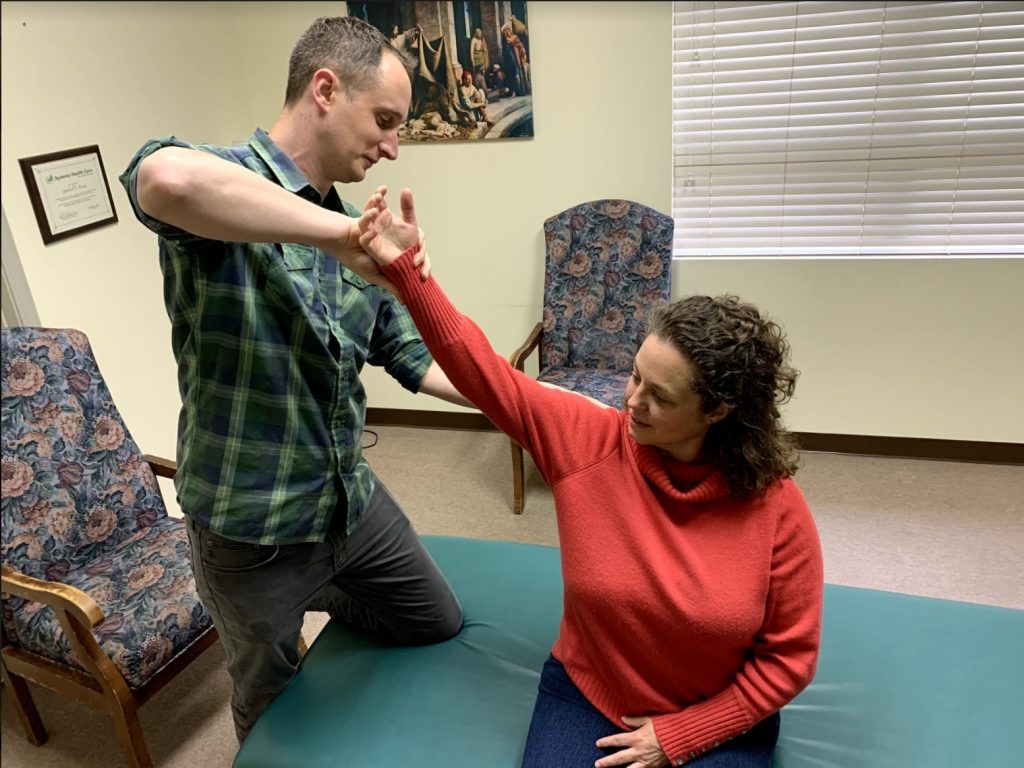
Applied Kinesiology comes up in almost every new patient conversation I have. Someone will ask why I am pressing lightly against their arm or leg as part of the exam, and it is a fair question. It looks strange if you have never seen it before. So let me explain what it actually is, where it came from, and why I built my practice around it.
What Applied Kinesiology Actually Is
Applied Kinesiology, or AK, is a system of manual muscle testing used to evaluate how the nervous system is communicating with the rest of the body. Rather than treating a muscle as just a muscle, AK treats it as a feedback signal. A muscle that tests weak under a specific, standardized challenge is not necessarily a weak muscle in the gym sense. It is more often a sign that something upstream, structural, chemical, or mental, is interfering with the signal that muscle is supposed to receive.
That distinction is the whole point of AK. Instead of guessing at a treatment or treating symptoms in isolation, I use muscle testing to ask the body direct questions and let it answer. It turns the exam into a two-way conversation rather than a one-size-fits-all protocol.
Where It Came From
AK was developed in 1964 by Dr. George J. Goodheart, Jr., a chiropractor who noticed that postural distortion patterns kept showing up alongside specific, identifiable muscle weaknesses. When he corrected the muscle dysfunction directly, using what he called origin-insertion technique, the postural distortion resolved along with it. He documented the method that same year in his first Applied Kinesiology Workshop Manual, and it has been refined by practitioners ever since.
Goodheart went on to become the first chiropractor named to a United States Olympic Medical Team, in 1980. In 1976 a group of doctors he had trained founded the International College of Applied Kinesiology (ICAK-USA), which still handles the education, ethical standards, and certification of AK practitioners today. That is the same organization whose standards inform my own training and continuing education.
The Triad of Health
AK is built around a concept called the Triad of Health. It holds that essentially every health problem, whether it shows up as pain, fatigue, digestive trouble, or something else entirely, traces back to one or more of three categories:
- Structural — the bones, muscles, joints, and fascia, and how well they are holding up and moving under load
- Chemical — nutrition, gut health, hormones, toxins, and the biochemistry running underneath everything else
- Mental — stress, emotional load, and how the nervous system is regulating in response to it
Structure sits at the base of the triad for a reason. If the frame is off, chemistry and mental state end up compensating for it constantly, which is exhausting for the body even when nothing shows up on a scan. Most patients have some involvement from all three sides. AK is a way of figuring out which side is driving a given problem right now, rather than assuming it is always the same one.
How a Manual Muscle Test Actually Works
A manual muscle test is not a strength test. I am not checking how strong you are; I am checking whether a specific muscle can hold a stable, neurologically appropriate response to a light, standardized challenge. When it cannot, that is called a functional inhibition, and it is reversible. Correct the underlying interference, structural, chemical, or mental, and the same muscle typically tests strong again immediately. That immediate before-and-after is what makes AK useful as a real-time diagnostic tool rather than a one-time snapshot.
From there, I use what are called diagnostic challenges, small provocations such as light touch, therapy localization, or specific movements, to narrow down exactly what the nervous system is reacting to. It lets me test a hypothesis in the room in real time, alongside the lab work and imaging I already order as part of a full functional medicine workup, not instead of it.
How I Use It In Practice
AK, like functional medicine, treats the body as one connected system rather than a collection of separate parts to be managed independently. In my office I use an advanced form of AK called Systems Health Care (SHC), developed by Dr. Stephen Gangemi. SHC layers a structured hierarchy on top of traditional AK so that a practitioner can identify not just that something is off, but where in the body's priority order to address it first. That matters, because treating things out of order tends to produce short-lived results.
In a typical visit, muscle testing helps me decide where to focus that day: a myofascial release, a specific nutritional or herbal support, a structural adjustment, or a mind-body technique. It is also how I track whether a treatment plan is actually working, week to week, rather than waiting months to find out.
None of this replaces comprehensive lab work. I often order comprehensive blood work and, as needed, specialty testing to see the full picture. AK is what helps me connect those results to what is actually happening in your body and prioritize what to address first.
Who Tends to Benefit
I most often reach for AK with patients who have already been through the standard workup, normal labs, normal imaging, and still do not feel right. Gut issues, fatigue, hormonal imbalance, chronic pain, and autoimmune-pattern symptoms are common examples. AK will not replace imaging when imaging is genuinely needed, and it is not a substitute for emergency care. What it is good at is finding the functional problems that sit upstream of a diagnosis, the kind of thing that shows up as "everything looks normal but you still feel terrible."
The Bottom Line
Applied Kinesiology is not a party trick and it is not guesswork. It is a structured, repeatable way of asking the nervous system direct questions and using its answers to guide treatment in real time. Combined with functional medicine and Systems Health Care, it is the foundation of how I practice, and it is a big part of why patients who have not gotten answers elsewhere often find them here.
If you want to see how it works firsthand, a free consult is the easiest way to start.