The Gut Microbiome Isn’t Just for Digestion — It’s Your Wellness HQ
Introduction
Most people think of the gut as a digestive organ—a system that breaks down food, absorbs nutrients, and eliminates waste. But inside your digestive tract lives a dense, complex world of microorganisms collectively known as the gut microbiome. This ecosystem contains trillions of bacteria, fungi, and archaea that influence everything from hormone balance to immune resilience and mental health.
For decades, medicine viewed gut microbes as passengers. Functional medicine and new microbiome science now show they are active drivers of wellness or dysfunction. The foods we eat shape this internal ecosystem daily, determining whether it works for us or against us.
The Microbiome: Your Inner Control Center
The gut microbiome acts like a communication hub, sending biochemical signals to nearly every body system. Microbes produce vitamins, neurotransmitters, and short-chain fatty acids (SCFAs) that regulate inflammation and energy metabolism. When the microbial community becomes imbalanced—a condition called dysbiosis—these protective signals decline, setting the stage for fatigue, immune issues, and chronic inflammation.
A functional medicine perspective looks for root causes of those imbalances. Often, it starts with the diet: a refined, low-fiber, high-sugar diet feeds the wrong bacteria, while nutrient-dense, whole-food meals promote microbial balance and healing.
Research confirms that diet is the primary modulator of gut microbial diversity—more influential than probiotics or supplements. This is a point I stress with every patient. And by far the most difficult thing I ask of them. It is not simply taking a pill like we are used to. A healthy diet can restore balance in just days, while a Western diet high in processed oils and refined carbs suppresses beneficial species. (1, 2)
Diet and Diversity: Why Fiber and Phytonutrients Matter
Microbes thrive on plant diversity. The fibers and polyphenols found in vegetables, roots, fruits, herbs, and spices act as prebiotics—food for beneficial bacteria. Traditional cultures, including those studied by Weston A. Price, naturally consumed dozens of plant varieties weekly, far surpassing modern averages.
Studies show that individuals who eat 30 or more unique plant foods per week have significantly greater microbiome diversity than those consuming 10 or fewer. (3) More diversity in the gut microbiome means better metabolic control, immune tolerance, and resistance to pathogens.
This being said, don't misunderstand me. I am not advocating for the oftentimes touted high fiber diets out there. I don't mean for you to buy the fiber supplements and mix them in water for your daily intake. When you eat a well rounded diet, you will naturally get enough fiber. The human gut is designed to only handle so much fiber. Our colon is small compared to different animals. If you look at a gorilla, who spends most of its daily eating, they have a large belly due to the fermentation of the different plant foods. Their gut is fundamentally different from a human's. Humans are designed very differently. So bear that in mind.
A Paleo-style approach fits beautifully here: seasonal vegetables, tubers, fruits, nuts, seeds, and herbs form the foundation. Combine that with quality animal proteins and healthy fats, and you’re creating a microbiome-supportive template.
Check out my article on What Should Humans Eat for more!
Fermented and Traditional Foods: Ancestral Probiotics
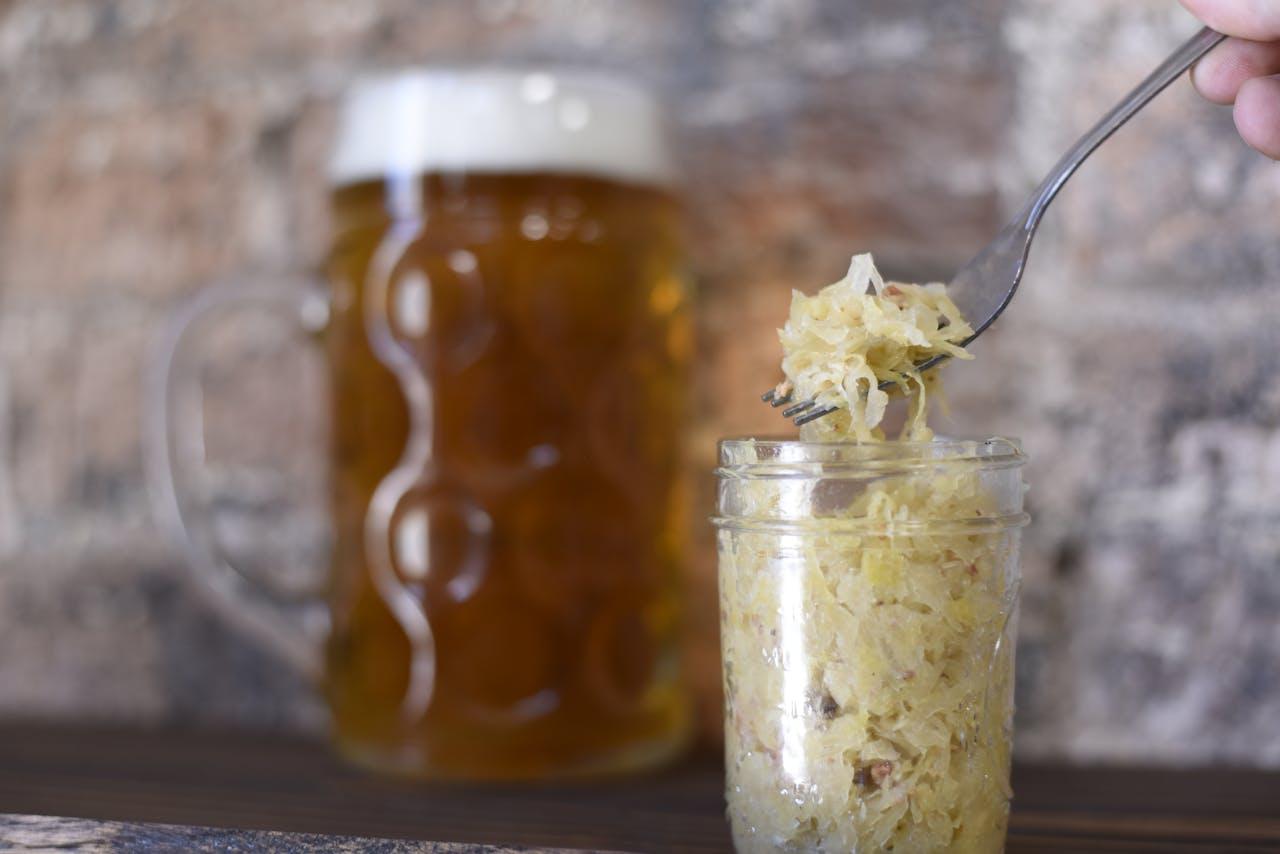
Before refrigeration, fermentation was the original food preservation method—and a daily source of living microbes. Fermented foods like sauerkraut, kefir, kimchi, and (real) pickles supply beneficial bacteria and metabolites that strengthen the gut barrier and immune defenses. (4)
Modern research confirms what ancestral diets proved through experience: regular fermented food intake increases microbiome diversity and lowers inflammatory markers. Even a few servings per week can significantly change microbial composition within one month. (5)
For patients hesitant about fermented flavors, gentle options like yogurt, beet kvass, or pickled vegetables can ease the transition.
Modern Microbiome Stressors
Our environment can also deplete microbial diversity. Factors such as antibiotic use, chlorinated water, alcohol, and ultra-processed foods disrupt healthy colonies. Even excessive sanitation and lack of soil exposure reduce microbial training for the immune system. (6)
That’s why functional practitioners often include gradual rewilding steps—like gardening, time outdoors, and organic soil exposure—to rebuild the body’s microbial relationship with nature. The goal isn’t dirt for dirt’s sake—it’s re-establishing the ecological dialogue our ancestors maintained effortlessly.
A Simple Functional Medicine Gut Protocol
1. Feed the good guys.
Aim for 25–30 different plant foods weekly. Focus on roots, herbs, leafy greens, crucifers, and fruit. It is easier than you think if you use herbs for seasoning.
2. Embrace fermented foods.
Include small daily servings or several per week. These can be homemade or store-bought if naturally fermented (not vinegar-preserved).
3. Prioritize ancestral fats and proteins.
Choose grass-fed meats, wild fish, eggs, bone broth, and traditional fats like butter, olive oil, and coconut oil. Avoid refined seed oils and hydrogenated fats.
4. Limit microbial disruptors.
Reduce alcohol, sugar, and processed foods. Avoid unnecessary antibiotics. Use filtered water to reduce chemical exposure.
5. Support stress resilience and rest.
Sleep deprivation and chronic stress reduce microbial diversity and alter gut motility. Practices like breathwork, prayer, and light movement help restore vagal tone—the brain-gut connection.
From Gut to Whole-Body Health
A balanced microbiome doesn’t just aid digestion. It supports hormonal balance, glucose regulation, neurotransmitter production, and detoxification. Emerging evidence links a healthy gut to reduced risk of metabolic syndrome, autoimmune activity, and even improved thyroid function. (7, 8)
For functional medicine, the gut is the soil from which every organ system draws nourishment. Heal the gut ecosystem, and the rest of the body often follows.
References
- Sonnenburg ED, Sonnenburg JL. Starving our microbial self: The deleterious consequences of a diet deficient in microbiota-accessible carbohydrates. Cell Metab. 2014;20(5):779-786. doi:10.1016/j.cmet.2014.07.003
- Zhang J, et al. Dietary modulation of gut microbiota contributes to health: Recent advances and perspectives. Nutrients. 2023;15(2):428. https://pubmed.ncbi.nlm.nih.gov/26425705/
- Johnson AJ, et al. Daily sampling reveals personalized diet-microbiome associations in humans. Cell Host Microbe. 2019;25(6):789-802.e5. https://pubmed.ncbi.nlm.nih.gov/31194939/
- Marco ML, et al. Health benefits of fermented foods: microbiota and beyond. Curr Opin Biotechnol. 2017;44:94-102. https://www.sciencedirect.com/science/article/abs/pii/S095816691630266X
- Wastyk HC, et al. Gut-microbiota-targeted diets modulate human immune status. Cell. 2021;184(16):4137-4153.e14. https://pubmed.ncbi.nlm.nih.gov/34256014/
- Rook GA. Regulation of the immune system by biodiversity from the natural environment: An ecosystem service essential to health. Proc Natl Acad Sci U S A. 2013;110(46):18360-18367. https://pubmed.ncbi.nlm.nih.gov/24154724/
- Tilg H, Moschen AR. Microbiota and diabetes: An evolving relationship. Gut. 2014;63(9):1513-1521. https://pubmed.ncbi.nlm.nih.gov/24833634/
- Duntas LH, Biondi B. The interconnections between obesity, thyroid function, and the gut microbiome. Endocrine. 2020;68(3):437-448. https://pubmed.ncbi.nlm.nih.gov/22934923/